
TL;DR / Key Insights
- A secured credit card is backed by a fixed deposit and is designed for people with low, damaged, or no credit history.
- Banks usually offer 80 to 90 percent of the FD value as the credit limit, though a few cards offer 100 percent.
- Regular on-time payments and low usage are what actually improve the credit score, not the deposit itself.
- Most secured cards report to CIBIL and Experian, unlike prepaid cards.
- With disciplined use over 6 to 12 months, many users become eligible for an unsecured credit card.
A low or non-existent credit score blocks access to regular credit cards, personal loans, and even simple EMI options. For first-time earners, freelancers, or people rebuilding credit after past defaults, banks still need a safety net. That gap is filled by secured credit cards.
A secured credit card works like a normal credit card but is issued against a fixed deposit. Approval is straightforward, risk for the bank is limited, and credit bureaus still receive full repayment data. This makes secured cards one of the most reliable entry points into India’s formal credit system.
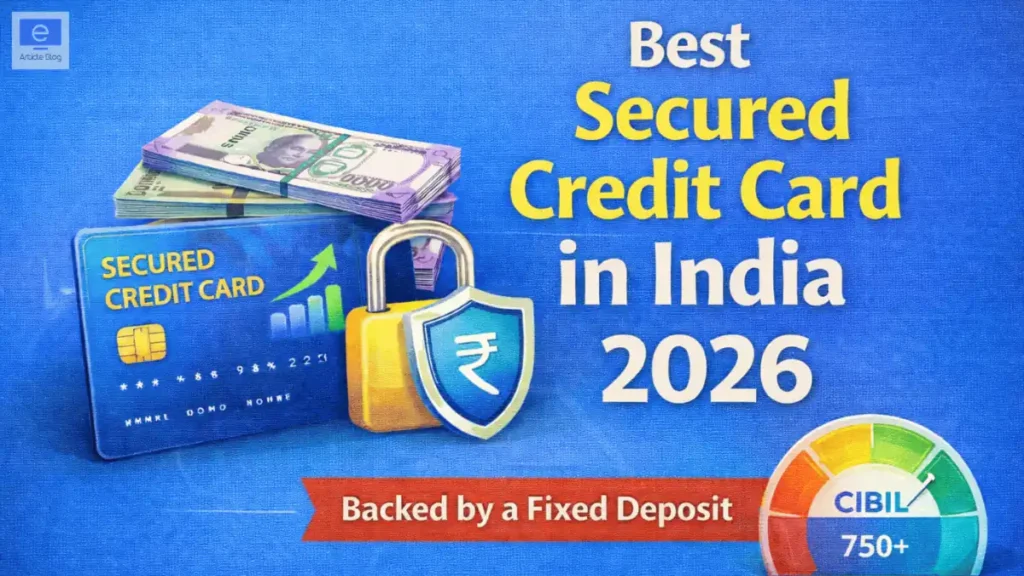
This guide explains how secured credit cards work, how they help build credit, and which options currently stand out in the Indian market.
What a Secured Credit Card Is and How It Works?
A secured credit card is issued after placing a fixed deposit with the issuing bank. The deposit acts as collateral and is linked directly to the card account.
The Role of Fixed Deposits (FD) as Collateral
The FD protects the bank if payments are missed. Because of this security, banks do not require income proof, salary slips, or a strong credit history. The FD remains locked in and cannot be withdrawn while the card is active.
Credit Limit vs. FD Amount (The 80–90% Rule)
Most banks offer a credit limit that is slightly lower than the FD value.
Common structures include:
- FD of ₹25,000 gives a limit of ₹20,000 to ₹22,500
- FD of ₹50,000 gives a limit of ₹40,000 to ₹45,000
Some newer cards offer a 100 percent limit, but this is not yet the norm.
Earning Interest on Your Deposit While Using the Card
The FD continues to earn interest at standard bank rates. The money is not spent or reduced when card transactions happen. Only unpaid dues at closure, if any, are adjusted against the FD.
Difference Between Secured and Prepaid Cards
Secured cards are reported to credit bureaus. Prepaid cards are not.
This is the most critical difference. Prepaid cards function like loaded wallets, while secured credit cards build a credit history through monthly billing cycles and repayments.
Top 10 Secured Credit Card in India
| Credit Card | Min FD | Joining Fee | Annual Fee |
|---|---|---|---|
| IDFC FIRST WOW! Credit Card | ₹20,000 | Nil | Nil (LTF) |
| Kotak 811 #DreamDifferent Credit Card | ₹10,000 | Nil | Nil (LTF) |
| SBI Card Unnati | ₹25,000 | Nil | Nil (first 4 yrs), ₹499 from 5th yr |
| AU Nomo Credit Card | ₹20,000 | ₹199 | ₹199 (waived on ₹50k spend) |
| Axis Bank My Zone Easy Credit Card | ₹15,000 | ₹500 | ₹500 |
| ICICI Bank Instant Platinum Credit Card | ₹50,000 | Nil | Nil (LTF) |
| TATA Neu Infinity HDFC Secured Credit Card | ₹15,000 | ₹1,499 | ₹1,499 (waived on ₹3L spend) |
| OneCard (Secured Variant) | ₹5,000 (Plastic) / ₹50,000 (Metal) | Nil | Nil |
| BoB PRIME Credit Card | ₹15,000 | Nil | Nil (usually LTF) |
1. IDFC FIRST WOW! Credit Card

Key Details:
- Minimum FD: ₹20,000 (standard requirement)
- Fees and Charges:
- Joining Fee: Nil
- Annual Fee: Nil (Lifetime Free)
Benefits:
- Credit Limit: 100% of FD value
- FD Interest Rate: Earn up to 7.25% p.a.
- Zero Forex Markup: 0% markup on international spends
- Reward Validity: 4X reward points that never expire
- Exclusive Discounts: Dining discounts up to 20% at 1,500+ restaurants
2. Kotak 811 #DreamDifferent Credit Card

Key Details:
- Minimum FD: ₹10,000
- Fees and Charges:
- Joining Fee: Nil
- Annual Fee: Nil (Lifetime Free)
Benefits:
- Credit Limit: Up to 90% of FD
- Online Rewards: 2 reward points per ₹100 on online spends
- Welcome Benefit: 500 bonus points for spending ₹5,000 in the first 45 days
- Interest-Free Cash: Withdraw cash with no interest for up to 48 days (processing fee of ₹100 per ₹10,000)
- Fuel Waiver: 1% fuel surcharge waiver (max ₹3,500/year)
3. SBI Card Unnati

Key Details:
- Minimum FD: ₹25,000
- Fees and Charges:
- Joining Fee: Nil
- Annual Fee: Nil for the first 4 years (₹499 from the 5th year)
Benefits:
- Milestone Rewards: ₹500 cashback for annual spends of ₹50,000+
- Reward Points: 1 reward point per ₹100 spent
- Global Acceptance: Use at over 24 million outlets worldwide
- Add-on Facility: Add cards for family members over 18
4. AU Nomo Credit Card

Key Details:
- Minimum FD: ₹20,000
- Fees and Charges:
- Joining Fee: ₹199
- Annual Fee: ₹199 (waived on ₹50,000 annual spend)
Benefits:
- Low Forex Markup: 0.99% markup on international spends
- Lounge Access: 2 domestic lounge visits per quarter
- Reward Points: 2 reward points per ₹100 spent
- Credit Limit: 100% of FD
5. Axis Bank My Zone Easy Credit Card

Key Details:
- Minimum FD: ₹15,000
- Fees and Charges:
- Joining Fee: ₹500
- Annual Fee: ₹500
Benefits:
- Entertainment: Buy 1 Get 1 Free on movie tickets (up to ₹200)
- Food Delivery: ₹120 off on Swiggy orders (min ₹500) twice a month
- OTT Subscription: Complimentary SonyLIV Premium on first spend
- Edge Rewards: 4 points for every ₹200 spent
6. ICICI Bank Instant Platinum Credit Card

Key Details:
- Minimum FD: ₹50,000
- Fees and Charges:
- Joining Fee: Nil
- Annual Fee: Nil (Lifetime Free)
Benefits:
- Interest Rate: Earn regular FD interest while using credit line
- Dining Savings: 15% off via ICICI Bank Culinary Treats
- Reward Points: 2 ICICI Rewards points per ₹100 spent
- Security: Contactless chip for secure payments
7. TATA Neu Infinity HDFC Secured Credit Card

Key Details:
- Minimum FD: ₹15,000 (credit limit capped at 90% of FD)
- Fees and Charges:
- Joining Fee: ₹1,499
- Annual Fee: ₹1,499 (waived on ₹3L spend)
Benefits:
- NeuCoins: Up to 10% back on Tata Neu and partner brands (BigBasket, Croma, IHCL)
- Lounge Access: 8 domestic & 4 international lounge visits per year
- Insurance: ₹1 Crore air accident cover
- Forex: Reduced 2% forex markup for international travel
8. OneCard (Secured Variant)

Key Details:
- Minimum FD: ₹5,000 (Plastic); ₹50,000 (Metal)
- Fees and Charges:
- Joining Fee: Nil
- Annual Fee: Nil
Benefits:
- Metal Card: High-quality metal card for FD > ₹50,000
- Fractional Rewards: 5X rewards on top 2 spend categories each month
- Family Share: Share limit with family members via the app
- Instant Virtual Card: Immediate access to card details upon FD creation
9. Bank of Baroda (BoB) PRIME Credit Card

Key Details:
- Minimum FD: ₹15,000
- Fees and Charges:
- Joining Fee: Nil
- Annual Fee: Nil (First year free, typically LTF against FD)
Benefits:
- Cashback: 1% cashback on all spends (no upper limit)
- Fuel Waiver: 1% fuel surcharge waiver (₹400–₹5,000)
- Zero Processing Fee: No fee on add-on cards
- Easy EMI: Convert purchases > ₹2,500 into easy monthly installments via the app
10. Suryoday RuPay Platinum Secured Credit Card

Key Details:
- Minimum FD: ₹1,000
- Fees and Charges:
- Joining Fee: Nil
- Annual Fee: Nil
Benefits:
- Universal Acceptance: Works on RuPay network with UPI linking
- Insurance: Personal Accidental Death and Permanent Total Disability cover up to ₹2 Lakhs
- Concierge: 24/7 concierge services for travel and hotel bookings
- Merchant Offers: Access exclusive RuPay Platinum discounts on e-commerce platforms
How Secured Credit Cards Help Build and Improve Credit Scores?
The deposit alone does not improve the score. Behaviour does.
1. Reporting to Credit Bureaus (CIBIL, Experian): Banks report secured credit card activity to credit bureaus such as CIBIL and Experian. Each billing cycle creates a repayment record, just like an unsecured card.
2. The Importance of On-Time Repayments: Even one missed payment can offset months of good behaviour. Secured cards are often issued to thin-file users, where every entry has a stronger impact on the score. Setting up auto-debit for the total due amount reduces risk significantly.
3. Keeping Your Credit Utilization Ratio Low: Using the full limit regularly signals credit stress. For secured cards with low limits, keeping usage below 30 percent is difficult but important. A ₹20,000 limit should ideally see monthly usage under ₹6,000.
Popular Secured Credit Card Options Offered by Banks
Public Sector vs. Private Sector Bank Offerings
Public sector banks such as State Bank of India focus on branch-based issuance and conservative limits. Private banks offer faster onboarding and better digital control but often require slightly higher deposits.
Digital-First Banks and Fintech Options
Digital-first banks have simplified the process. Cards linked to instant FD creation and app-based management reduce paperwork and approval time. These options are especially popular among first-time credit users.
Eligibility Criteria Common Across Most Banks
Most banks follow similar eligibility rules:
- Minimum age of 18 years
- Indian residency
- Fixed deposit creation with the issuing bank
- No mandatory income proof
Managing Credit Limits on Secured Credit Cards
1. Increase Your Limit by Topping Up Your FD: Increasing the FD amount usually increases the card limit automatically or after a short review. Some banks require manual requests through customer support or branch visits.
2. Maxing Out Your Secured Limit: Maxed-out limits harm credit utilisation ratios. For secured cards, this effect is amplified because the limits are small. Frequent full utilisation can stall credit score growth.
3. Request a Limit Enhancement: Most banks consider enhancements after 6 to 12 months of clean repayment history. A stable usage pattern matters more than the absolute FD amount.
How to Close a Secured Credit Card Account
Method #1: Steps to Liquidate the Linked Fixed Deposit
Before closure:
- Clear all outstanding dues
- Request card closure
- Wait for the lien on the FD to be removed
Only after this is the FD released or prematurely closed.
Method #2: Upgrading to an Unsecured Card Instead of Closing
Some banks allow conversion to an unsecured card after consistent usage. This preserves credit history and avoids resetting account age. This option is often better than closure.
Impact of Closing the Account on Credit Age and Score
Closing an older card can reduce average credit age. A temporary dip in the score is possible, especially for users with short credit histories.
FAQs
What is the minimum FD needed for a secured credit card?
Most banks start between ₹10,000 and ₹25,000, depending on the card.
Does a secured credit card guarantee credit score improvement?
No. Improvement depends on timely payments and low utilisation.
Can the bank use my FD if I miss payments?
Yes. Unpaid dues can be adjusted against the FD after closure.
Is a secured credit card safer than an unsecured one?
For the bank, yes. For the user, spending discipline is still required.
Conclusion
Secured credit cards exist for one clear purpose: giving access to formal credit where none exists. When used carefully, they create a documented repayment history that opens the door to unsecured cards and better loan terms.
The fixed deposit is a temporary compromise, not a cost. Responsible usage over time matters more than the size of the deposit. For anyone blocked by credit score issues, a secured credit card remains one of the most predictable ways to move forward.
